
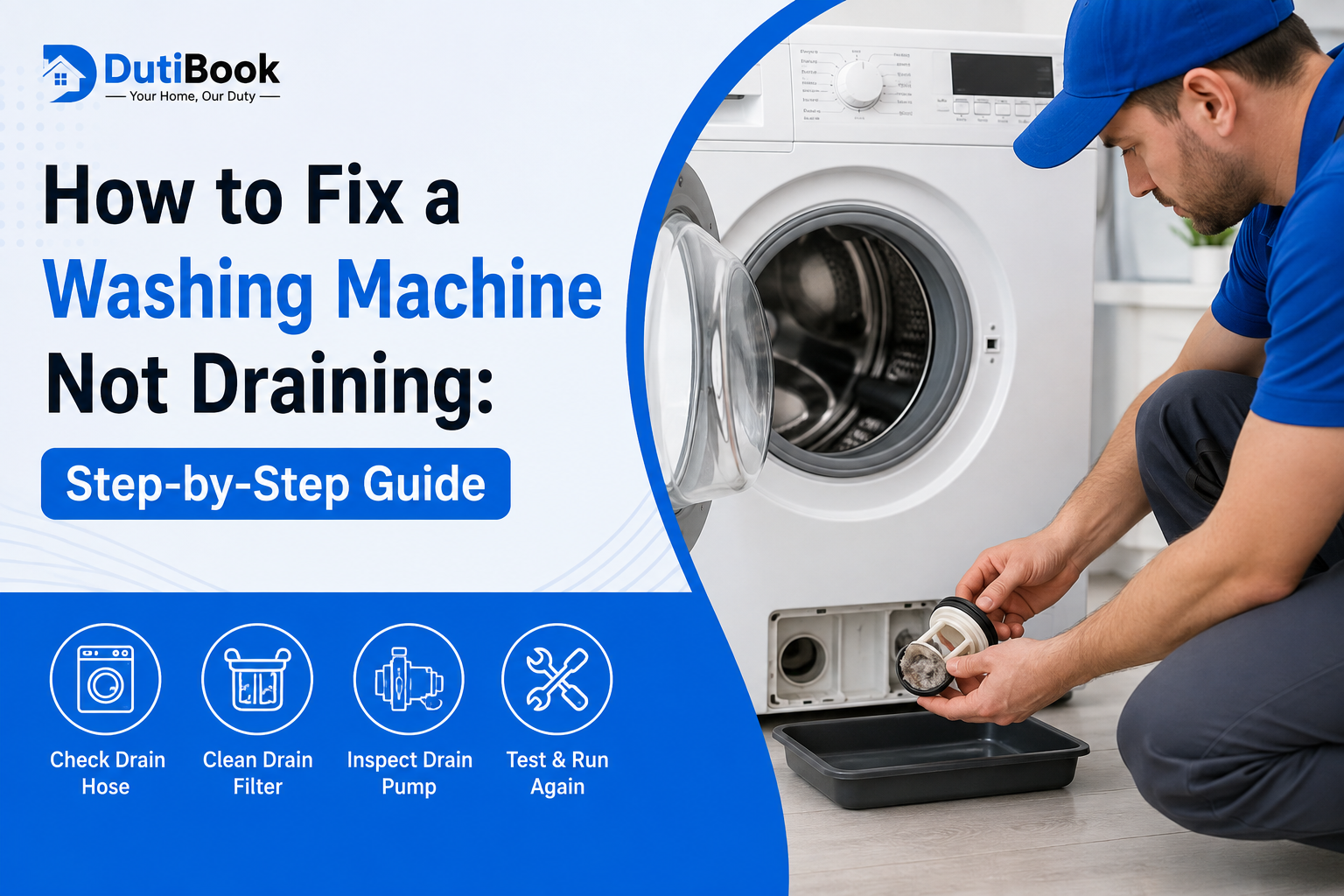
How to Fix a Washing Machine Not Draining: Step-by-Step Guide
By Dutibook
Published: August 29, 2026
You open the washer after a cycle and find it full of dirty water or clothes that are soaking wet and won't spin. A washing machine not draining is one of the most common appliance problems in Indian homes, and the good news is that many causes are simple to check yourself. This guide explains how to fix a washing machine not draining in a logical order, with clear steps and safety notes on when to stop and call a professional.
Quick Answer
If your washing machine is not draining, the usual causes are a clogged drain filter, a blocked or kinked drain hose, or a jammed drain pump. Start by switching off the power, then check the drain filter for lint and coins, straighten and clear the drain hose, and make sure the drain outlet isn't blocked. If water still won't drain after these checks, the drain pump or control board may have failed and needs a technician.
Why Your Washing Machine Isn't Draining
Before fixing, it helps to understand the common causes, roughly in order of how often they happen:
• Clogged drain filter: Lint, coins, hairpins, and small items collect here and block flow. This is the single most common cause in front-load machines.
• Blocked or kinked drain hose: The hose can twist behind the machine or get clogged with detergent residue and debris.
• Drain outlet or floor drain blockage: The pipe or floor drain the hose empties into may itself be blocked.
• Jammed or failed drain pump: A small object stuck in the pump, or a burnt-out pump motor, stops draining.
• Faulty lid/door switch: Some machines won't drain or spin if they think the lid or door is open.
• Control board or timer fault: Less common, but electronic faults can stop the drain cycle.
• Wrong cycle selected: Occasionally the machine is simply on a "soak" or no-spin setting.
How to Fix a Washing Machine Not Draining: Step-by-Step
Work through these steps in order. Stop at any point where the problem is solved.
Step 1: Switch off and unplug the machine
Turn off the power and unplug the washer before touching anything. If the drum is full of water, you'll drain it in a later step. What to observe: confirm the machine is fully powered off.
Step 2: Check the cycle and settings
Make sure you didn't select a soak, delicate, or no-spin option. Restart with a normal spin/drain cycle. What to observe: whether the machine now attempts to drain. If it drains, the issue was just the setting.
Step 3: Inspect the drain hose
Pull the machine out gently and look at the drain hose at the back.
• Straighten any kinks or twists.
• Make sure it isn't pushed too far down the drain pipe, which can create suction problems.
• Detach the end (keep a bucket ready) and check for clogs or gunk.
What to observe: water or debris coming out when you lower the hose into a bucket. If water gushes out, the blockage was downstream.
Step 4: Check the drain outlet / floor drain
The pipe or floor drain the hose empties into can be blocked. Pour water into it separately to test.
What to observe: whether water flows away freely. If it backs up, the household drain is the problem, not the machine, and a plumber can clear the blocked outlet.
Step 5: Clean the drain pump filter (front-load machines)
Most front-load washers have a small access panel at the bottom front. Behind it is the drain filter.
• Place towels and a shallow tray underneath, as water will spill.
• Unscrew the filter slowly and let water drain out.
• Remove lint, coins, buttons, and debris.
• Rinse and refit it firmly.
What to observe: trapped objects and trapped water. Clearing this fixes a large share of drainage problems.
Step 6: Drain a top-load machine manually
If it's a top-load machine full of water, you may need to bail out water, then check the hose and outlet as above. Top-load filters are often inside the drum area; check your user manual for the location.
Step 7: Run a test cycle
Reconnect everything, restore power, and run a short rinse/spin cycle.
What to observe: whether water drains fully. If it does, you're done. If not, move to professional help.
When to Stop and Call a Professional
Some issues aren't safe or practical to fix yourself. Call a washing machine repair service if:
• Water still won't drain after clearing the filter, hose, and outlet
• The drain pump is noisy, silent, or clearly not running (a burnt smell means switch off immediately)
• The machine shows a drain-related error code that persists
• You suspect a faulty lid/door switch or control board
• Is there any electrical smell, sparking, or exposed wiring
• The machine is leaking from inside the body
Opening the pump housing, replacing the pump, or touching the control board involves electrical parts and internal components best handled by a trained technician.
Safety Warnings
• Always unplug the machine before checking the filter, hose, or pump.
• Water and electricity are dangerous together. Keep the area dry and don't touch electrical parts with wet hands.
• Never bypass the lid/door safety switch to force a spin.
• If you smell burning or see sparks, stop, switch off at the mains, and call a professional.
Common Mistakes to Avoid
• Skipping the drain filter: It's the most common fix and the most overlooked.
• Forcing the door open on a front-load machine still full of water. Drain it first via the filter or emergency drain hose.
• Ignoring a kinked hose pushed behind the machine during installation.
• Overloading the machine, which can cause draining and spin problems.
• Using too much detergent, which leaves residue that clogs hoses over time.
Preventing Drainage Problems
• Check pockets for coins, tissues, and small items before washing.
• Clean the drain filter every few weeks or as the manual suggests.
• Use the right amount of detergent for your load and water hardness.
• Don't overload the drum.
• Keep the drain hose free of sharp kinks and make sure the outlet drains freely.
Front-Load vs Top-Load Draining Problems
|
Aspect |
Front-Load |
Top-Load |
|
Main clog point |
Drain pump filter (front panel) |
Drain hose / pump area |
|
Ease of DIY filter access |
Usually easy |
Varies by model |
|
Common trapped items |
Coins, lint, hairpins |
Lint, small fabric items |
|
Door safety lock issue |
Common if full of water |
Lid switch can stop spin |
Final Thoughts
A washing machine not draining is usually caused by something simple: a full drain filter, a kinked hose, or a blocked outlet. Work through the checks in order, with the power off, and you'll solve most cases at home. When the pump, switch, or control board is at fault, it's time for a professional.
If the drain still won't clear or you'd rather not open up the machine, you can book a verified appliance repair technician or a plumber through DutiBook and get transparent pricing before any work begins. For other common home fixes, see our guide on how to fix AC leaking water.
Frequently Asked Questions
The most likely reasons are a clogged drain filter, a blocked or kinked drain hose, or a blocked drain outlet. A jammed or failed drain pump is another common cause. Start by switching off the power and checking the filter and hose.
Switch off and unplug the machine, then use the drain filter access panel (front-load) or the drain hose to release water into a bucket or tray. Keep towels ready, as water will spill out.
Yes. A clogged drain pump filter is one of the most common causes. Lint, coins, and small objects collect there and block water flow. Cleaning it regularly prevents drainage problems.
This is often a lid or door switch issue, an unbalanced or overloaded drum, or leftover water from partial draining. If the machine drains fully but still won't spin, a technician should check the switch and motor.
Basic checks, like cleaning the filter, clearing the hose, and testing the outlet, are safe when the machine is unplugged. Repairs involving the pump, wiring, or control board should be left to a professional.
Every few weeks to once a month is a good habit, or as your user manual recommends. Regular cleaning prevents blockages and keeps draining smooth.
A basic visit and drainage fix is usually modest, but replacing the drain pump or control board costs more depending on the part and brand. Always confirm the diagnosis and quote before approving repairs.