
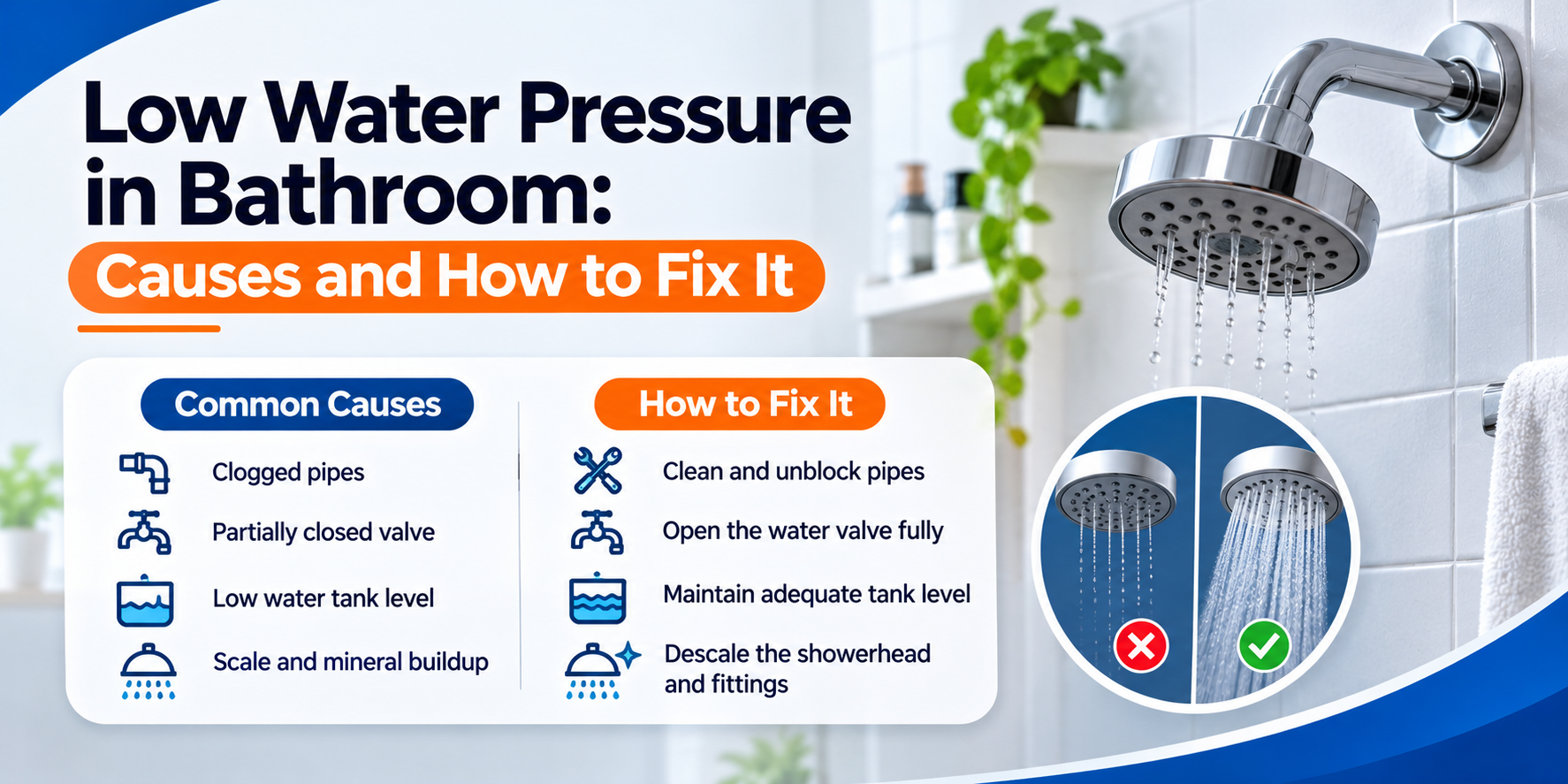
Low Water Pressure in Bathroom: Causes and How to Fix It
By Dutibook
Published: November 02, 2026
Low water pressure in bathroom taps or showers can turn a quick morning routine into a frustrating wait. But a weak shower does not always mean your entire home's supply pressure is too low. The restriction could be inside the showerhead, a hose, a valve or the bathroom supply pipe.
Before replacing fittings or buying a pump, find out whether the problem affects one outlet, one bathroom or the whole property. For homes in Gurgaon, Noida and Delhi NCR, it also helps to identify whether water comes from an overhead tank, a shared pumping system or the municipal supply.
Quick answer
Start by comparing bathroom and kitchen outlets, then check hot and cold flow separately. Clean accessible shower nozzles according to the manufacturer's instructions, inspect hoses and confirm there is no supply interruption. Persistent weak flow may need a plumber to inspect valves, pipe restrictions, leaks or building pressure. Install a booster only after identifying the cause.
Is it low water pressure or low water flow?
Pressure is the force pushing water through the system. Flow is the volume delivered over time, usually measured in litres per minute, or L/min. A blocked showerhead can reduce flow even when the pressure reaching it is adequate.
A bucket test measures flow, not pressure. A plumber uses an appropriate gauge to measure static pressure with outlets closed and operating pressure while water is flowing. Comparing both helps distinguish weak supply from restrictions that become noticeable during use.
Common low water pressure in bathroom causes
Blocked shower nozzles or inlet screens
Mineral deposits and trapped debris can restrict the shower's water path. Suspect a local restriction if the basin tap works normally while the shower has become weak or sprays unevenly. Hansgrohe identifies dirty sealing screens as a possible reason for reduced shower flow. [1]
Partly closed valves or damaged hoses
A bathroom isolation valve left partly closed after repairs can restrict supply. A sharply bent hand-shower hose or damaged internal hose lining may also reduce flow.
Look at accessible connections without forcing anything. Old valves may seize or leak when disturbed. Leave shared building valves and unfamiliar controls to the maintenance team or plumber.
Low tank level or insufficient height
In a gravity-fed system, pressure depends on the vertical distance between the water surface in the tank and the outlet. A shower close below an overhead tank may have less available pressure than a lower outlet.
As a physics illustration, three metres of water head provide roughly 0.29 bar of static pressure before pipe losses. That is not a recommended operating pressure: each fitting has its own requirements. Grundfos describes rooftop systems in which upper floors need separate boosting because the available height is insufficient. [2]
Shared demand or building pump problems
If flow drops when several bathrooms are used together, available supply capacity may be insufficient for simultaneous demand. A weak supply, restrictive pipework or a pumping problem could contribute.
Compare busy and quiet periods. If neighbouring flats have the same symptoms, ask building maintenance to check the shared supply and pressure zone before changing your own fittings.
Restricted pipes, filters or mixer components
Debris after plumbing work, blocked filters, corrosion in older metal pipes and faulty mixer components can reduce delivery. Crosswater's troubleshooting guidance includes outlet blockages and scale or debris in cartridges among possible checks. [3]
Concealed mixer and pipe repairs need proper isolation and diagnosis. Do not remove wall panels or dismantle cartridges simply because the spray feels weak.
Leaks or a restriction on the hot-water side
Leaks can reduce available delivery, although a small leak may not noticeably change shower performance. Damp patches, unexplained water use or a pump running unexpectedly deserve investigation.
If cold flow is normal but hot flow is weak at several outlets, the restriction may be in the water-heater connections, a valve or the shared hot-water line. If only one mixer is affected, a local fault becomes more likely.
Match the symptom to the next check
|
Symptom |
Possible explanation |
Useful next check |
|---|---|---|
|
Shower weak but basin normal |
Showerhead, hose or mixer restriction |
Inspect visible deposits and hose bends |
|
Basin weak but shower normal |
Tap aerator or local valve restriction |
Check accessible fittings and product guidance |
|
Hot weak but cold normal |
Hot-side restriction or mixer issue |
Compare other hot-water outlets |
|
Whole home weak |
Supply, main valve, tank or pump issue |
Ask neighbours and building maintenance |
|
Flow falls during other use |
Shared demand or restrictive pipework |
Repeat with other outlets off |
|
Problem starts after repairs |
Valve position or debris |
Tell the plumber what work was done |
How to fix low water pressure in shower fittings
Work through simple observations before attempting maintenance. If you see an active leak near electrical equipment or sudden unexplained flooding, stop using the affected area and arrange professional help.
Compare outlets and temperatures
Run the basin, shower and kitchen cold tap separately. Note whether the issue is constant, limited to hot water or associated with another outlet opening. Keep clear of the stream while checking temperature, especially if the shower alternates between hot and cold.
Measure the flow consistently
Use a container with a known volume and time how long it takes to fill at a safely accessible outlet. Keep the outlet setting and test conditions consistent.
Flow in L/min = container volume in litres × 60 ÷ filling time in seconds.
For example, two litres collected in 20 seconds equal 6 L/min. This is a measurement, not a universal pass-or-fail threshold. Compare it with the fitting's specifications and repeat after any approved cleaning. Avoid climbing or awkwardly holding a heavy bucket beneath an overhead shower.
Clean only accessible parts as instructed
Check the product's care guide before cleaning. Some flexible nozzles can be rubbed gently to loosen deposits, while certain removable parts allow descaling. Hansgrohe advises suitable mild, citric-acid-based products and warns against aggressive cleaning agents. [4]
Use the approved product, dilution and contact time, then rinse thoroughly. Do not assume vinegar suits every finish or seal. Never mix cleaning chemicals. If removal needs force, tools near fragile pipework or unfamiliar disassembly, stop and call a plumber.
Inspect the hose and confirm supply conditions
Straighten visible hose kinks gently and look for damage or leakage. Check the tank level through a safe, normal indicator rather than accessing an unsafe roof or opening a tank yourself.
Ask whether supply work or pump maintenance is underway. A building-wide issue needs attention at the shared system, even if replacing a bathroom fitting seems easier.
How to increase water pressure in bathroom systems
The lasting solution depends on what testing finds. Removing a blockage restores lost flow; genuinely insufficient pressure may require changes to the supply system.
Choose fittings suited to the available pressure
Before installing a rain shower or concealed mixer, check its minimum operating pressure and flow requirements. A large showerhead designed for a stronger supply may disappoint in a gravity-fed bathroom.
A compatible showerhead can improve spray comfort at the available supply, but it does not create additional upstream pressure. Do not remove flow controls or safety components without manufacturer approval.
Repair restrictions before considering a pump
Ask the plumber to assess valve operation, filters, hot-water connections and pipe condition. Where pipework is undersized or badly restricted, repair or replacement may be more appropriate than boosting pressure.
Request an explanation of the evidence before approving extensive pipe replacement. A pressure reading, flow comparison and inspection should guide the proposed work.
Assess a booster as a system change
A correctly selected booster can help where the supply provides inadequate pressure and sufficient water is available. It needs sizing around simultaneous demand, inlet conditions and the pressure limits of pipes, mixers and the geyser.
Grundfos advises checking local requirements before connecting boosters directly to municipal mains; some systems require storage between the mains and the pump. [5] In an apartment, coordinate with building management and the installer. Include dry-run protection, suitable controls and safe electrical installation in the assessment.
A bigger pump is not automatically better. Excessive pressure can create new problems, and a pump cannot compensate indefinitely for an empty tank or inadequate incoming water.
When should you call a plumber?
Arrange an inspection if cleaning does not restore flow, several outlets remain weak, hot and cold delivery differ significantly, or the problem returns quickly. Persistent dampness, corroded connections, repeated pump cycling and sudden pressure changes also warrant attention.
Leave heater servicing and internal plumbing work to a suitable professional. DutiBook's water heater maintenance guide provides related guidance when the hot-water side needs attention. You can also explore plumbing services and check availability for your location.
Restore reliable bathroom flow with the right diagnosis
Start with comparisons, accessible cleaning and supply checks. Persistent low water pressure in bathroom fittings needs measured diagnosis before spending on new fixtures, pipework or pumps.
Need help finding the cause? Visit DutiBook to check plumbing services available in your area. Share which outlets are affected, whether hot and cold differ, and when the issue started so the inspection can focus on the likely source.
Frequently Asked Questions
Why is thCan I improve bathroom water pressure without a pump?ere low water pressure in shower outlets only?
Yes, when the issue is a blockage, a partly closed valve or an unsuitable fitting. Correcting these can improve delivery. If measured supply pressure is genuinely insufficient, a broader plumbing solution may be necessary.
Both fixtures may share a supply that cannot maintain the same delivery during simultaneous use. Pipe sizing, restrictions and supply capacity can contribute. A plumber can test performance while both are running.
A conventional electric geyser heats water; it does not act as a pressure booster. Its pressure rating describes a limit it can withstand, not the outlet pressure it generates. Restricted heater connections can reduce hot-water flow.
It may change the spray pattern and improve the sensation of the shower, but it cannot generate additional supply pressure. Check compatibility and address the underlying cause before buying a replacement.