App icon
Dutibook
Book Home Services instantly

Helping you get more done

Stay updated with expert home maintenance tips, service guides, seasonal care advice, and the latest updates from our home service professionals—all in one place.

We found 28 articles for you

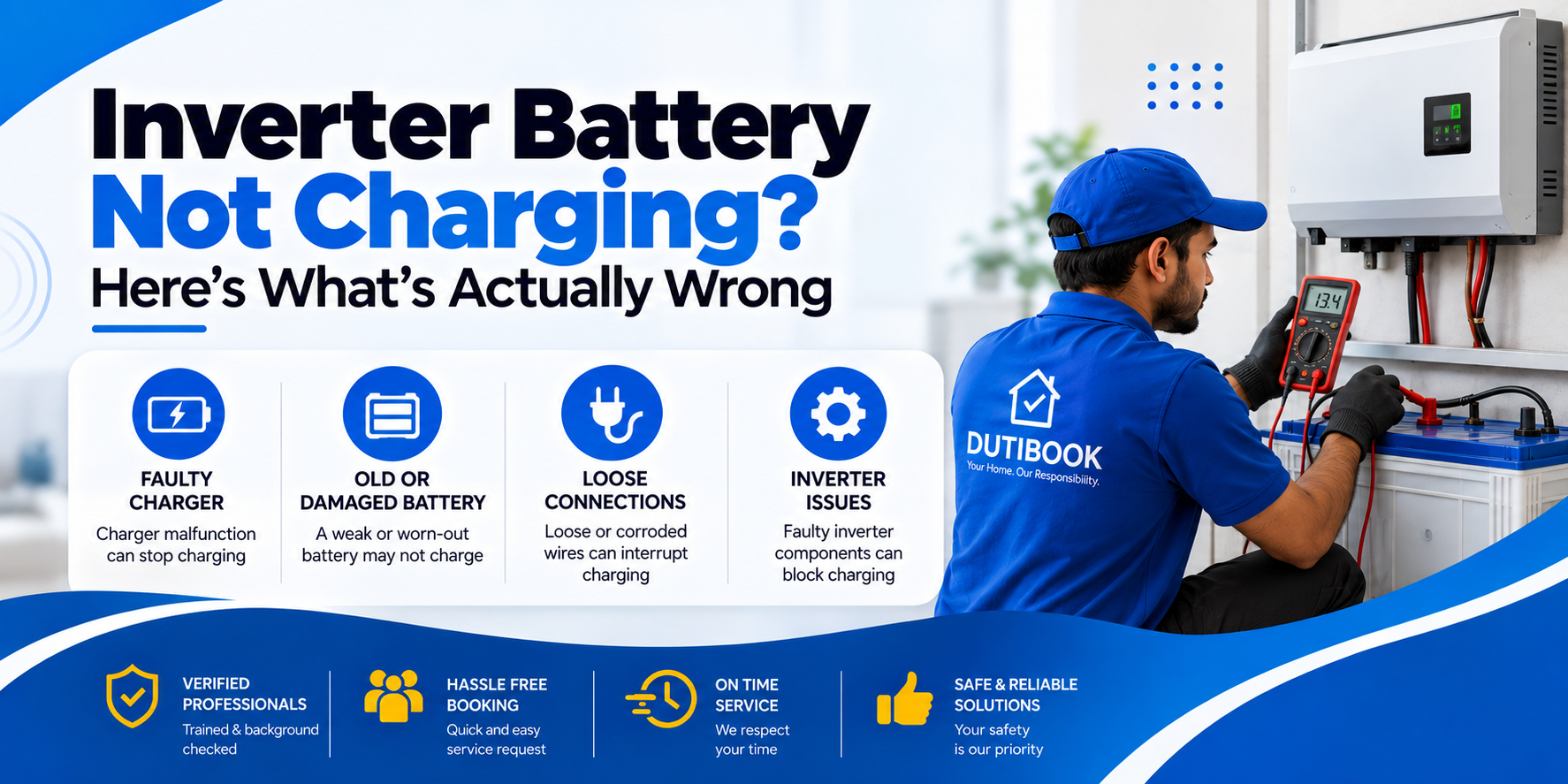
Inverter Battery Not Charging? Here's What's Actually Wrong
By Dutibook

Inverter Battery Not Charging? Here's What's Actually Wrong

If your inverter battery is not charging, the most common cause — by far — is a low or dry water level in the battery cells, which is easy to check...

Quick Answer If your inverter battery is not charging, the most common cause — by far — is a low or dry water level in the battery cells, which is easy to check and fix yourself with distilled water. Other common causes include corroded terminals, sulphation (lead deposits on the plates from prolonged undercharging), a blown fuse, or a failing charging circuit. If you recently topped up the water and it's still not charging properly, the underlying issue may be something water alone can't fix — like an old battery or a charger problem. Here's how to tell the difference. The One Thing Most People Get Wrong About "Charging Complete" Before troubleshooting, understand this: your inverter's charging light measures voltage, not how much energy is actually stored. A healthy battery takes hours to climb to full voltage as it genuinely fills u...
Electrical Panel Making Crackling Sounds? Here's What It Means
By Dutibook

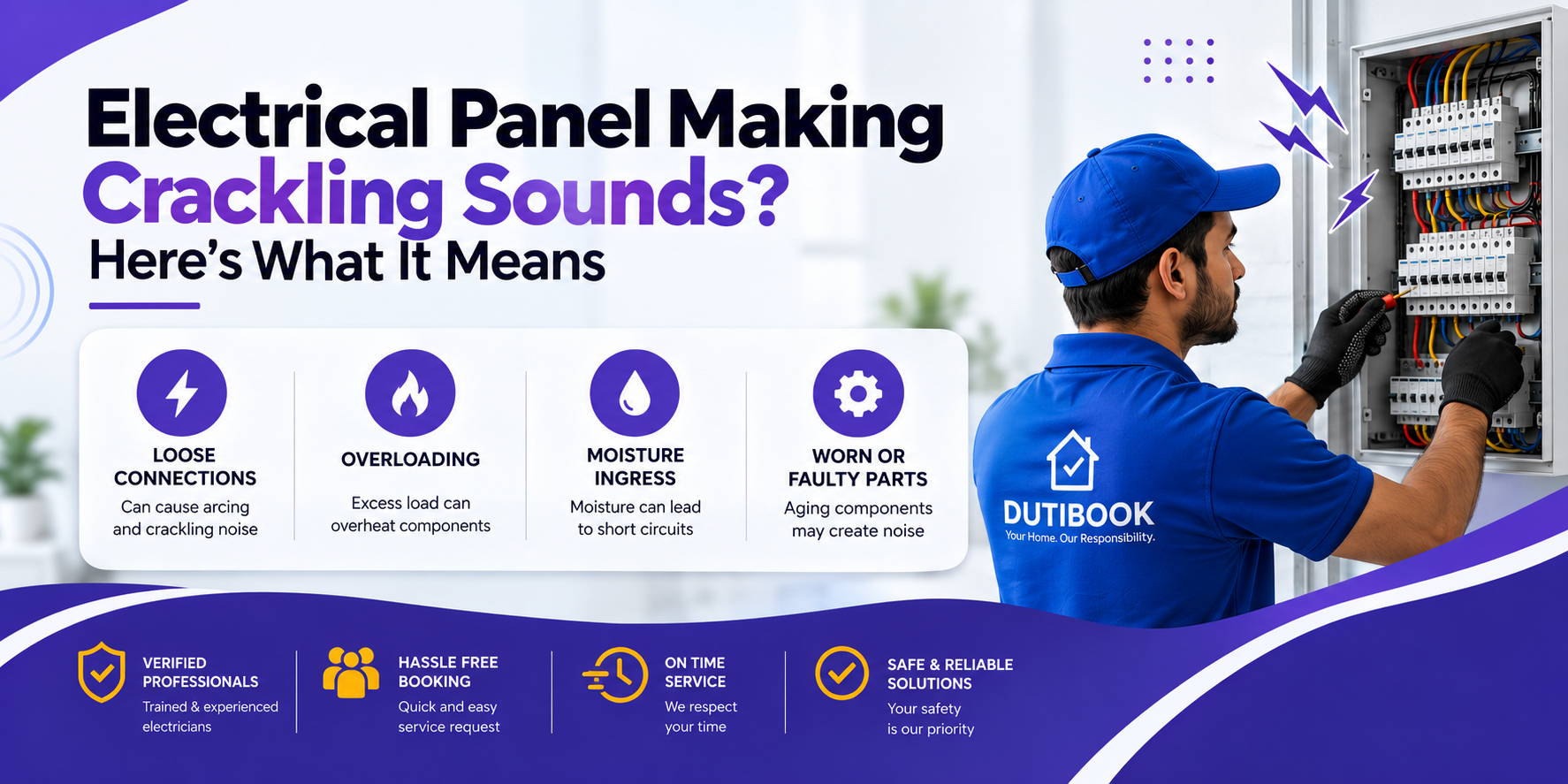
Electrical Panel Making Crackling Sounds? Here's What It Means

A crackling, sizzling, or popping sound from your electrical panel usually means electrical arcing or a loose connection — and it's a genuine fire haz...

Quick Answer A crackling, sizzling, or popping sound from your electrical panel, often described as an electrical panel making crackling sounds, usually means electrical arcing or a loose connection. This is a genuine fire hazard, not something to wait on. Unlike a faint, steady hum, which can be normal under heavy appliance load, crackling means electricity is jumping between connections and generating dangerous heat. Do not open the panel or attempt any repair yourself. If you notice crackling along with a burning smell, sparks, heat, or scorch marks, switch off the main power if you can safely reach it, and call a licensed electrician immediately. Is a Crackling Electrical Panel Dangerous? Yes — crackling and sizzling sounds are one of the more serious warning signs an electrical panel can give you. Here's why this specific sound matters more than others: A...

How Often Should You Deep Clean Your House? Complete Frequency Guide
By Dutibook

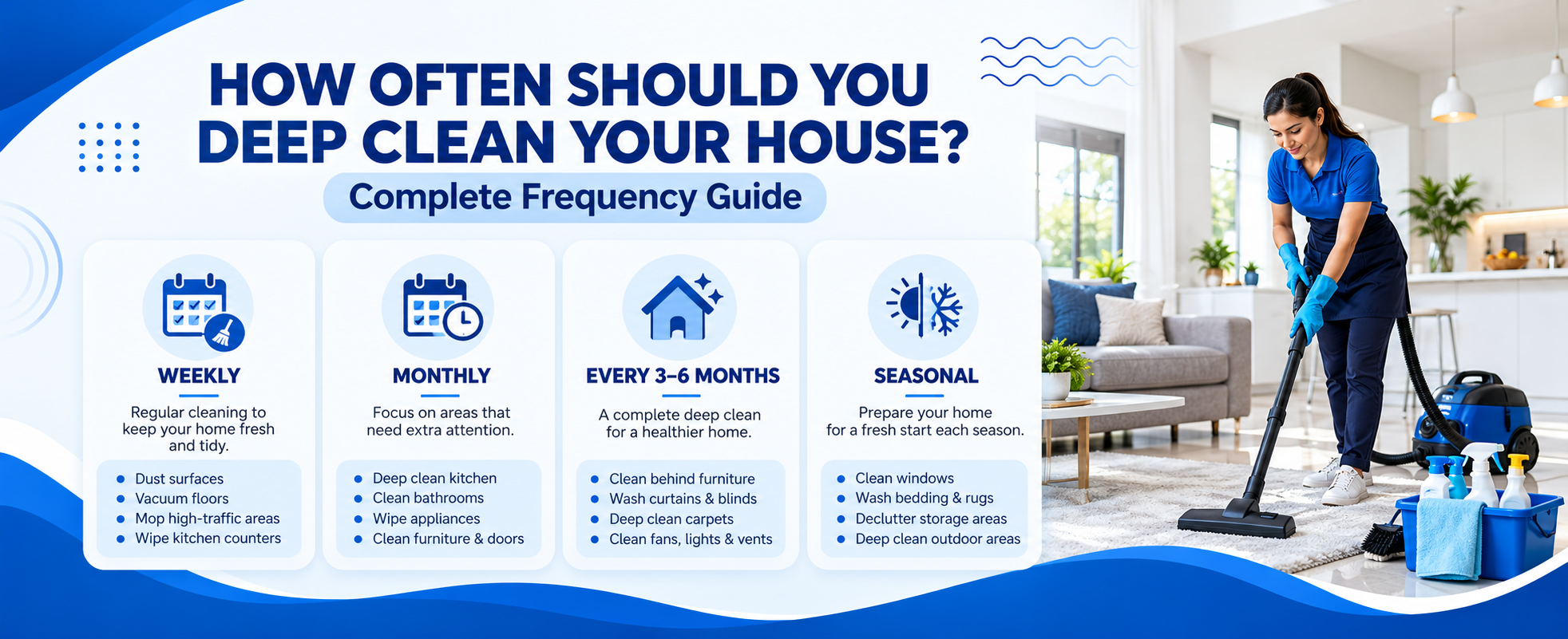
How Often Should You Deep Clean Your House? Complete Frequency Guide

Most homes need a full deep clean every 3 to 6 months, with high-traffic areas like the kitchen and bathroom receiving extra attention each month. If you are wo...

Quick Answer Most homes need a full deep clean every 3 to 6 months, with high-traffic areas like the kitchen and bathroom receiving extra attention each month. If you are wondering how often should you deep clean your house, this frequency provides a practical starting point. This is different from regular cleaning, such as dusting, mopping, and wiping surfaces, which should be done weekly or biweekly. The ideal frequency depends on factors such as pets, allergies, the number of people in your home, and the level of dust or pollution in your local area. In cities like Gurgaon, where dust and construction activity are common, many households benefit from deep cleaning closer to every 3 months rather than every 6 months. Regular Cleaning vs. Deep Cleaning: What's the Real Difference? People often use these terms interchangeably, but they're genuinely different jobs....

Electrical Safety During the Rainy Season: A Home Safety Guide
By Dutibook

Electrical Safety During the Rainy Season: A Home Safety Guide

The monsoon brings relief from the heat, but it also raises the risk of electric shocks, short circuits, and appliance damage in Indian homes. Water leakage, da...

The monsoon brings relief from the heat, but it also raises the risk of electric shocks, short circuits, and appliance damage in Indian homes. Water leakage, damp walls, and voltage fluctuations make electrical safety during the rainy season something every household should take seriously. This guide explains the common hazards, practical precautions, warning signs of danger, and exactly when to call a professional, with safety prioritized over DIY at every step. Quick Answer To stay safe during the monsoon, keep electrical points and appliances away from water, ensure your home has working earthing and an ELCB/RCCB, never touch switches or plugs with wet hands, and fix any damp patches near wiring quickly. If you notice tingling from taps or appliances, tripping, sparking, or a burning smell, switch off the main supply and call a licensed electrician immediately. Water and el...

How to Fix a Washing Machine Not Draining: Step-by-Step Guide
By Dutibook

How to Fix a Washing Machine Not Draining: Step-by-Step Guide

You open the washer after a cycle and find it full of dirty water or clothes that are soaking wet and won't spin. A washing machine not draining is one of t...

You open the washer after a cycle and find it full of dirty water or clothes that are soaking wet and won't spin. A washing machine not draining is one of the most common appliance problems in Indian homes, and the good news is that many causes are simple to check yourself. This guide explains how to fix a washing machine not draining in a logical order, with clear steps and safety notes on when to stop and call a professional. Quick Answer If your washing machine is not draining, the usual causes are a clogged drain filter, a blocked or kinked drain hose, or a jammed drain pump. Start by switching off the power, then check the drain filter for lint and coins, straighten and clear the drain hose, and make sure the drain outlet isn't blocked. If water still won't drain after these checks, the drain pump or control board may have failed and needs a technician....

Water Heater Maintenance: A Complete Guide for Indian Homes
By Dutibook

Water Heater Maintenance: A Complete Guide for Indian Homes

A geyser is one of those appliances you never think about until it stops heating on a cold morning. Regular water heater maintenance keeps it running safely, he...

A geyser is one of those appliances you never think about until it stops heating on a cold morning. Regular water heater maintenance keeps it running safely, heating faster, and lasting longer, while cutting the risk of a sudden breakdown or a costly replacement. This guide covers what maintenance actually involves, a simple checklist, warning signs to watch for, servicing costs, and when to call a professional. Quick Answer Water heater maintenance mainly involves periodic descaling, checking the heating element and thermostat, testing the safety valve, and flushing sediment from the tank. For most Indian homes, a geyser should be professionally serviced once a year, ideally before winter. Homes with hard water may need servicing more often because scaling builds up faster. Professional servicing usually costs around ₹300 to ₹600, excluding parts. Why Water Heater Maintena...

Annual Home Maintenance Cost in India: A Realistic 2026 Budget Guide
By Dutibook

Annual Home Maintenance Cost in India: A Realistic 2026 Budget Guide

Owning a home in India comes with running costs that go beyond your EMI. Between AC servicing before summer, waterproofing before the monsoon, plumbing fixes, p...

Owning a home in India comes with running costs that go beyond your EMI. Between AC servicing before summer, waterproofing before the monsoon, plumbing fixes, pest control, and painting every few years, the annual home maintenance cost adds up quietly. Most homeowners only notice it when a big repair lands all at once. This guide breaks down what you should realistically set aside each year, what changes the number, and how to plan so repairs don't blow your budget. Quick Answer For a typical Indian home, the annual home maintenance cost usually ranges from about ₹15,000 to ₹60,000 per year, depending on the size of the home, its age, and whether it's an apartment or an independent house. A common rule of thumb is to budget 1% of your home's value per year for maintenance. Apartments often pay less on structural upkeep because society maintenance covers common...

How to Fix a Refrigerator Not Cooling (2026 Troubleshooting Guide for Indian Homes)
By Dutibook

How to Fix a Refrigerator Not Cooling (2026 Troubleshooting Guide for Indian Homes)

Is your fridge running but not cooling? Before you panic, know that many causes are simple and safe to check yourself. If you're wondering how to fix a refr...

Is your fridge running but not cooling? Before you panic, know that many causes are simple and safe to check yourself. If you're wondering how to fix a refrigerator not cooling, start by checking the power supply and temperature setting, cleaning the condenser coils, making sure air vents aren't blocked, and confirming the door seals shut properly. This guide covers the common causes, DIY fixes, and when to call a technician. Quick Answer • First check: The power supply, thermostat/temperature setting, and whether the door is sealing properly. • Common cause: Dirty condenser coils or a blocked vent stopping airflow between the freezer and fridge sections. • Is the fridge not cooling, but the light is on? This usually points to a fan, thermostat, or airflow issue — not a total power failure. • Safe DIY fixes: Clean...

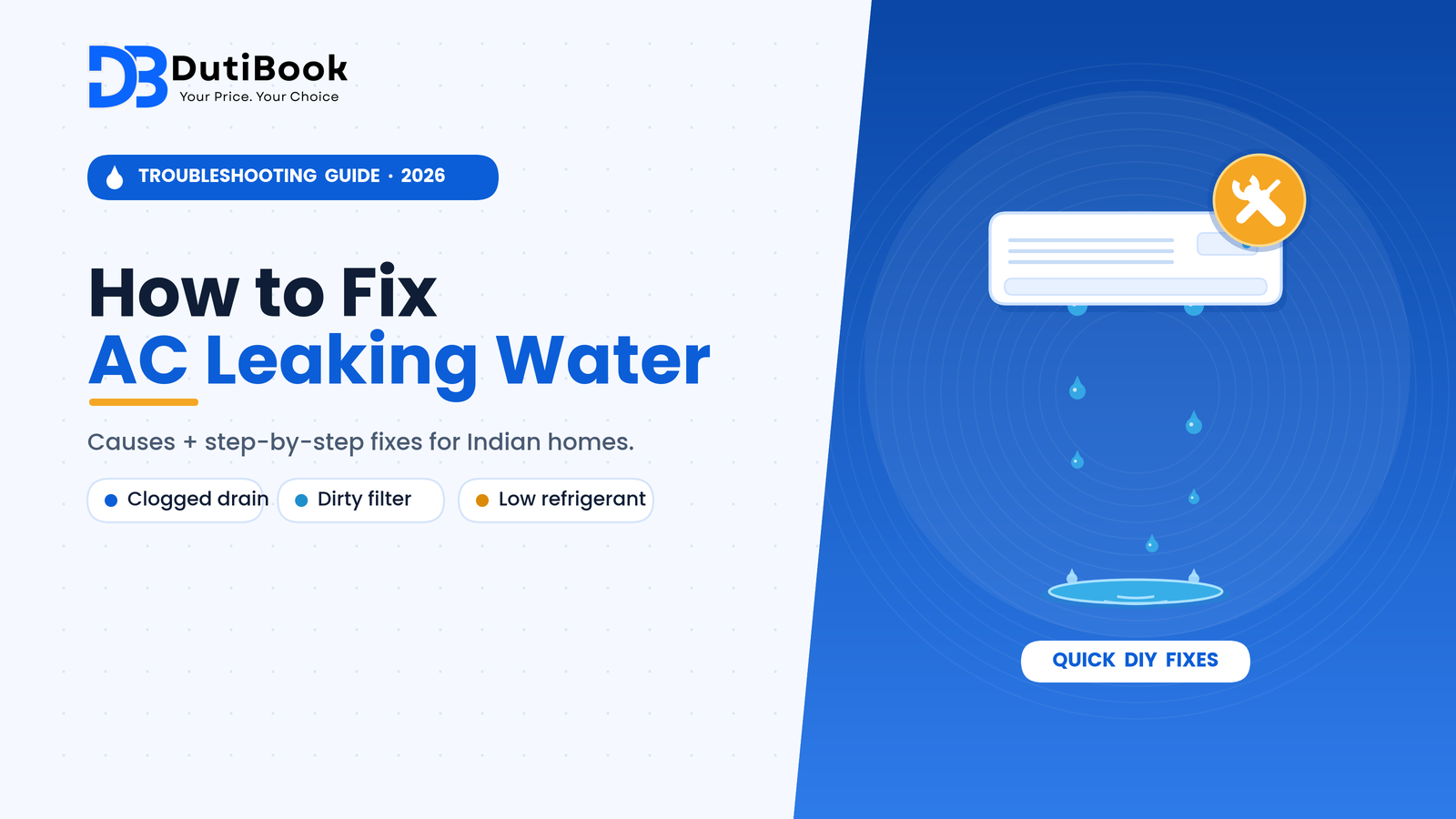
How to Fix AC Leaking Water (2026 Troubleshooting Guide for Indian Homes)
By Dutibook

How to Fix AC Leaking Water (2026 Troubleshooting Guide for Indian Homes)

Water dripping from your AC's indoor unit is one of the most common AC problems in Indian homes. The good news is that many causes are simple to fix. If you...

How to Fix AC Leaking Water (2026 Troubleshooting Guide for Indian Homes) Water dripping from your AC's indoor unit is one of the most common AC problems in Indian homes. The good news is that many causes are simple to fix. If you're wondering how to fix AC leaking water, start by checking and clearing the blocked drain pipe, cleaning the air filter, and confirming the indoor unit is level. This guide walks you through the common causes, safe DIY checks, and when to call a technician. Quick Answer • Most common cause: A blocked or clogged drain pipe, which backs up water into the indoor unit. • Second common cause: A dirty air filter, which restricts airflow and causes the coil to freeze and drip. • Quick DIY fixes: Clean the filter, clear the drain pipe, and check that the indoor unit is level. • Warning si...

How can I help you?